The United States Forest Service (USFS) has been protecting and managing federal lands since its official creation in 1905 under President Theodore Roosevelt. From creating National Forests to establishing research stations all over the country, the Forest Service has focused on preserving America’s public lands for future generations to come. However, recent actions and orders by the Trump Administration may change this goal.
Movement of Headquarters
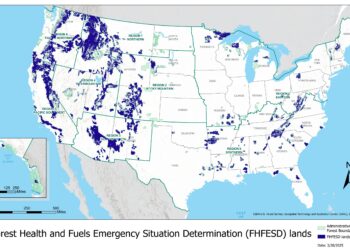
On March 31, 2026, the United States Department of Agriculture (USDA) announced in a press release that the U.S. Forest Service would be moving its headquarters from Washington D.C. to Salt Lake City, Utah. USDA Secretary Brooke L. Rollins stated that this was a “common sense” step in order to move leadership closer to the forests in the West. Along with this shift of headquarters, the USFS will see a large shift in operational and leadership structure. Prior to these actions taken by the Trump Administration, the U.S. Forest Service operated on a regional-based structure in which federally managed land was split up into nine regions, each operated by its own office. With the new orders, the Forest Service will now operate on a more state-based structure. Under this new management, the nine regional offices will be shut down and replaced by 15 political appointees called “State directors.” Due to this new shift in leadership and headquarters location, 2,600 employees will be relocated to these new facilities.
Shutdown of Research Facilities
Along with this new structure, other stations are being closed as well. This includes a whopping 57 out of the 77 research facilities that the U.S. Forest Service operates in 31 different states. These research stations are responsible for conducting science experiments and data collection in order to inform policy decisions when it comes to land management. Depending on the location of the facility, they specialize in important aspects such as wildfire dynamics, invasive species, and climate change studies. Now, in states spanning from Alaska to West Virginia, USFS research facilities will be shut down. In their place, a single national research and development facility will consolidate all operations at a site in Fort Collins, Colorado. In a separate informational tab about the reorganization, the USDA stated that this decision was made with the intent to “strengthen local leadership, streamline operations, and improve mission delivery.”
Significant Pushback
Many were quick to question the reasons given for this significant change in structure. Opponents argue that the shifting of the USFS headquarters is a deliberate attempt to gut the agency. Many point to actions that President Trump took in his first term when he relocated the headquarters of the Bureau of Land Management (BLM) from Washington D.C. to Grand Junction, Colorado. In this case, the BLM lost nearly 90% of its staff as many either could not relocate or simply refused to do so. A large portion of those who refused were scientists and environmentalists. So, many argue that the administration is now intentionally taking these actions with the USFS in order to disguise a mass firing as a relocation. By getting rid of these career scientists and researchers, there will be less internal opposition to the opening of public lands for logging, something that opponents also charge the administration with.
Additionally, by closing many of the research facilities, decades worth of studies of countless regions and areas will either be paused or completely lost. Many bring up the argument that you may be able to move the physical research stations, but you cannot move the wetlands, forests, deserts, lakes, and countless other ecosystems that these scientists study. This calls attention to the fact that these areas will no longer be under the watch of these facilities.
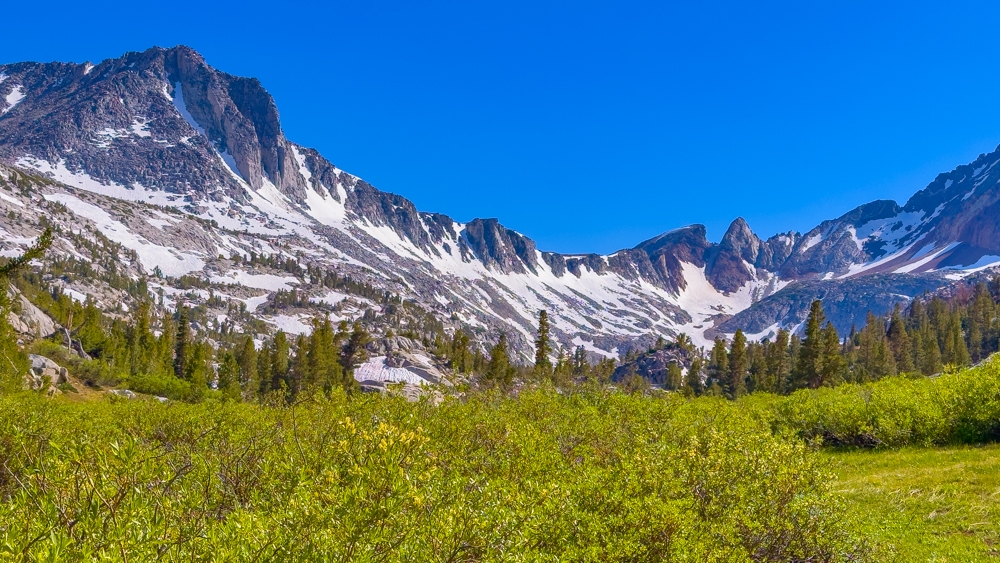
The new location of the USFS headquarters also has opponents worried. Utah is a significant location when it comes to political battles over the environment and public lands. The state is well known for producing politicians who seek to sell off these lands for profit, housing development, and logging. One notable example came last year when Senator Mike Lee (R-Utah) introduced an amendment to the Republican budget reconciliation bill (also known as the “Big, Beautiful Bill”) that mandated the selling of BLM and National Forest System (NFS) lands. This proposal was eventually struck out of the bill.
Opponents also point to interesting “coincidences” that seemed to happen in the time leading up to the reorganization of the Forest Service. Near the beginning of the year, Utah Governor Spencer Cox signed a deal with U.S. Forest Service Chief Tom Shultz that essentially gave the state of Utah control over 8 million acres of national forest under the guise of “partnership.”
It also just so happens that Tom Shultz, the new Chief of the United States Forest Service, is a former logging executive. The fact that he is overseeing the restructuring of the USFS while also consolidating control of the agency in the state that he just cut a deal with has caused many to become suspicious. This suspicion has led opponents to believe that this is not a reorganization, rather a dismantling.
As Robert Bonnie, the former Under Secretary of Agriculture for Farm Production and Conservation, put it:
This is not going to strengthen the Forest Service, it is going to weaken it… It’s not about solving problems, it’s about blowing things up.